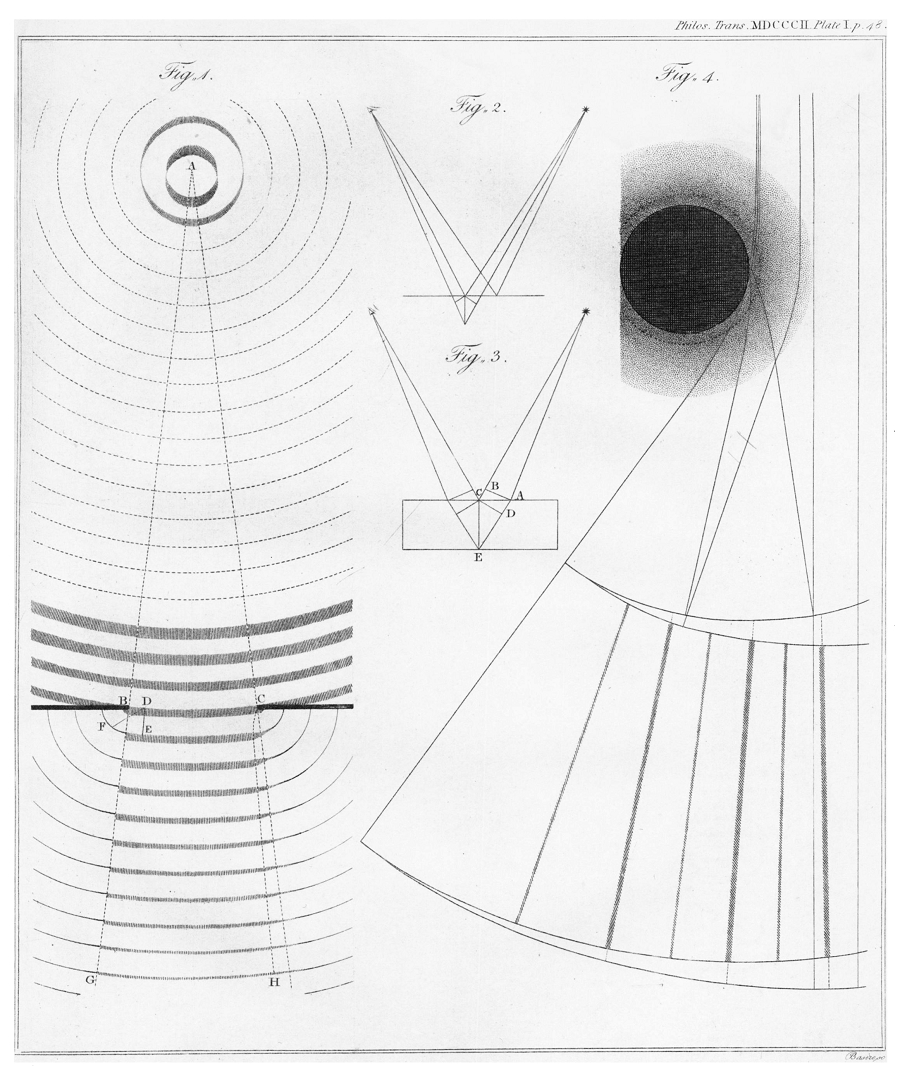
When two Undulations, from different Origins, coincide either
perfectly or very nearly in Direction, their joint effect is a Combination
of the Motions belonging to each.
Since every particle of the medium is affected by each undulation,
wherever the directions coincide, the undulations can
proceed no otherwise than by uniting their motions, so that
the joint motion may be the sum or difference of the separate
motions, accordingly as similar or dissimilar parts of the undulations
are coincident.
I have, on a former occasion, insisted at large on the application
of this principle to harmonics; (Phil. Trans. for 1800.
p. 130.) and it will appear to be of still more extensive utility in
explaining the phenomena of colours. The undulations which
are now to be compared are those of equal frequency. When
the two series coincide exactly in point of time, it is obvious
that the united velocity of the particular motions must be
greatest, and, in effect at least, double the separate velocities;
and also, that it must be smallest, and if the undulations are of
equal strength, totally destroyed, when the time of the greatest
direct motion belonging to one undulation coincides with that
of the greatest retrograde motion of the other. In intermediate
states, the joint undulation will be of intermediate strength;
but by what laws this intermediate strength must vary, cannot
be determined without further data. It is well known that a
similar cause produces in sound, that effect which is called a
beat; two series of undulations of nearly equal magnitude cooperating
and destroying each other alternately, as they coincide
more or less perfectly in the times of performing their respective
motions.
Corollary I. Of the Colours of striated Surfaces.
Boyle appears to have been the first that observed the colours
of scratches on polished surfaces. Newton has not noticed them.
Mazeas and Mr. Brougham have made some experiments on
the subject, yet without deriving any satisfactory conclusion. But
all the varieties of these colours are very easily deduced from
this proposition.
Let there be in a given plane two reflecting points very near
each other, and let the plane be so situated that the reflected
image of a luminous object seen in it may appear to coincide
with the points; then it is obvious that the length of the incident
and reflected ray, taken together, is equal with respect to
both points, considering them as capable of reflecting in all
directions. Let one of the points be now depressed below the
given plane; then the whole path of the light reflected from it,
will be lengthened by a line which is to the depression of the
point as twice the cosine of incidence to the radius. Fig. 2.
If, therefore, equal undulations of given dimensions be reflected
from two points, situated near enough to appear to the eye but
as one, wherever this line is equal to half the breadth of a whole
undulation, the reflection from the depressed point will so interfere
with the reflection from the fixed point, that the progressive
motion of the one will coincide with the retrograde
motion of the other, and they will both be destroyed; but, when
this line is equal to the whole breadth of an undulation, the
effect will be doubled; and when to a breadth and a half, again
destroyed; and thus for a considerable number of alternations;
and, if the reflected undulations be of different kinds, they will
be variously affected, according to their proportions to the various
length of the line which is the difference between the
lengths of their two paths, and which may be denominated the
interval of retardation.
In order that the effect may be the more perceptible, a number
of pairs of points must be united into two parallel lines;
and, if several such pairs of lines be placed near each other,
they will facilitate the observation. If one of the lines be made
to revolve round the other as an axis, the depression below the
given plane will be as the sine of the inclination; and, while
the eye and luminous object remain fixed, the difference of the
length of the paths will vary as this sine.
The best subjects for the experiment are Mr. Coventry’s
exquisite micrometers; such of them as consist of parallel lines
drawn on glass, at the distance of one five hundredth of an
inch, are the most convenient. Each of these lines appears
under a microscope to consist of two or more finer lines, exactly
parallel, and at the distance of somewhat more than a twentieth,
of that of the adjacent lines. I placed one of these so as to reflect
the sun’s light at an angle of 45°, and fixed it in such a manner,
that while it revolved round one of the lines as an axis, I could
measure its angular motion; and I found, that the brightest red
colour occurred at the inclinations 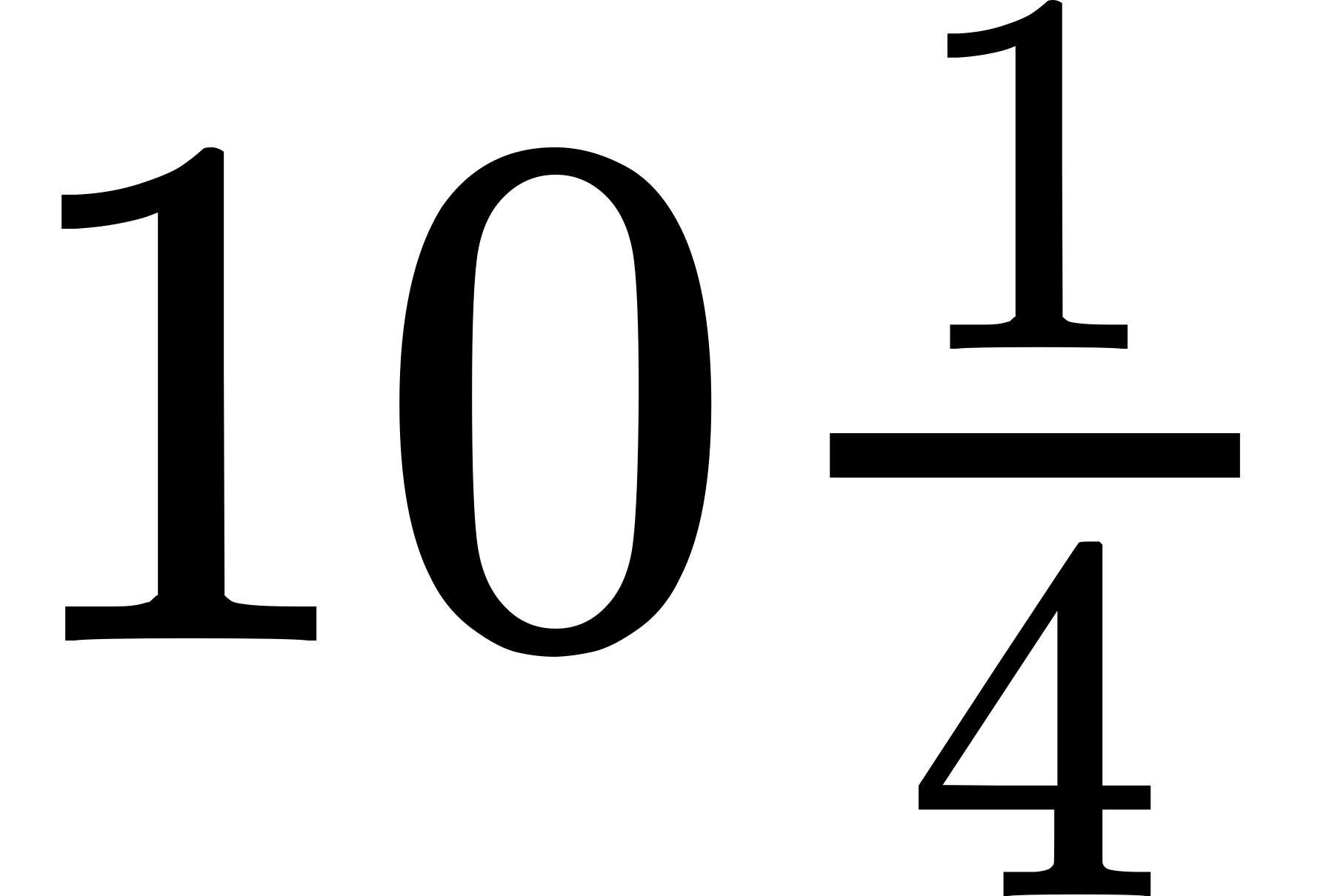 °,
°, 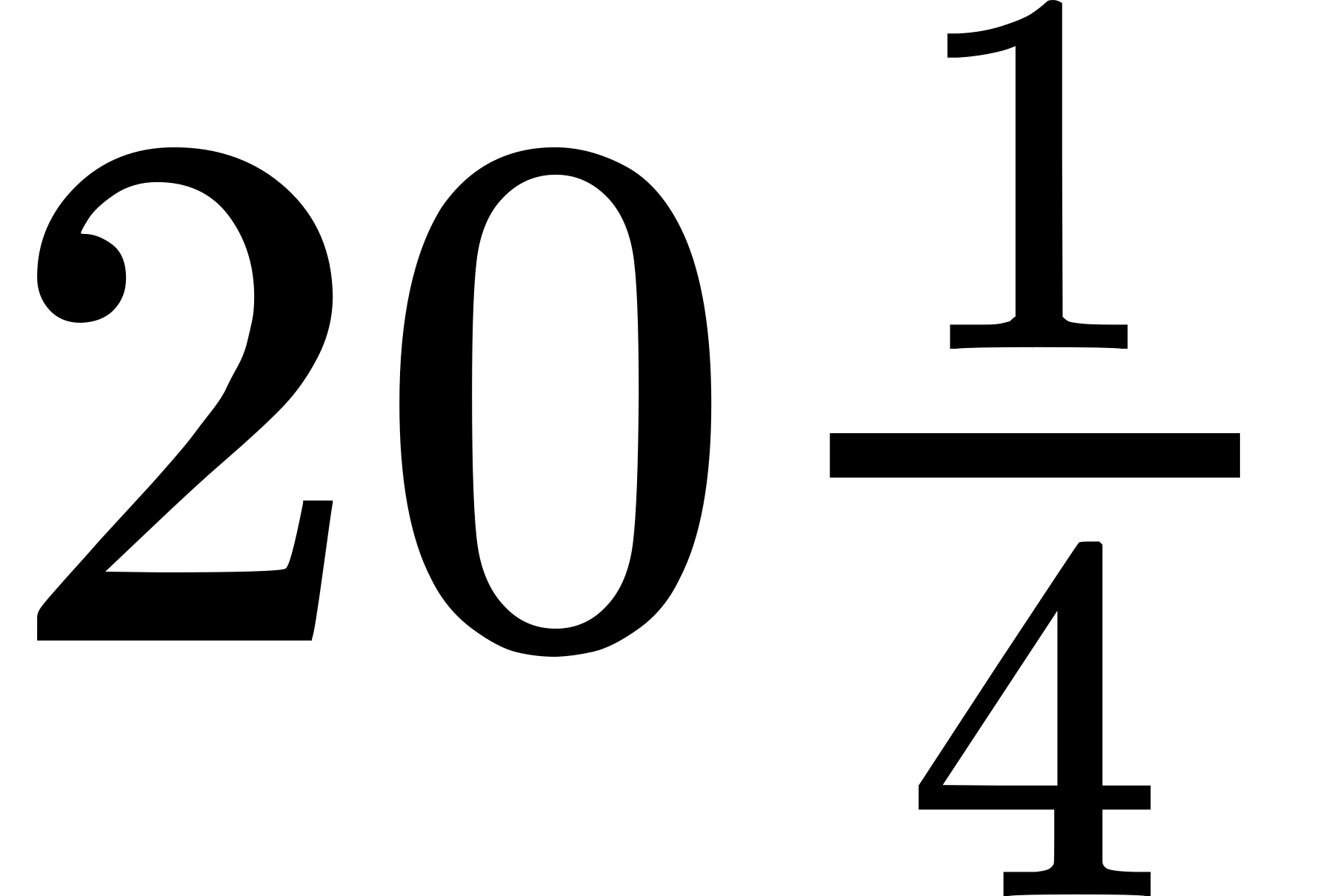 °, 32°, and 45°; of
which the sines are as the numbers 1, 2, 3, and 4. At all other
angles also, when the sun’s light was reflected from the surface,
the colour vanished with the inclination, and was equal at
equal inclinations on either side.
°, 32°, and 45°; of
which the sines are as the numbers 1, 2, 3, and 4. At all other
angles also, when the sun’s light was reflected from the surface,
the colour vanished with the inclination, and was equal at
equal inclinations on either side.
This experiment affords a very strong confirmation of the
theory. It is impossible to deduce any explanation of it from
any hypothesis hitherto advanced; and I believe it would be
difficult to invent any other that would account for it. There
is a striking analogy between this separation of colours, and the
production of a musical note by successive echoes from equidistant
iron palisades; which I have found to correspond pretty
accurately with the known velocity of sound, and the distances
of the surfaces.
It is not improbable that the colours of the integuments of
some insects, and of some other natural bodies, exhibiting in
different lights the most beautiful versatility, may be found to
be of this description, and not to be derived from thin plates.
In some cases, a single scratch or furrow may produce similar
effects, by the reflection of its opposite edges.
Corollary II. Of the Colours of thin Plates.
When a beam of light falls on two parallel refracting surfaces,
the partial reflections coincide perfectly in direction; and,
in this case, the interval of retardation, taken between the surfaces,
is to their distance as twice the cosine of the angle of
refraction to the radius. For, in Fig. 3, drawing AB and CD
perpendicular to the rays, the times of passing through BC and
AD will be equal, and DE will be half the interval of retardation;
but DE is to CE as the sine of DCE to the radius. Hence,
that DE may be constant, or that the same colour may be reflected,
the thickness CE must vary as the secant of the angle
of refraction CED: which agrees exactly with Newton’s experiments;
for the correction is perfectly inconsiderable.
Let the medium between the surfaces be rarer than the surrounding
mediums; then the impulse reflected at the second
surface, meeting a subsequent undulation at the first, will render
the particles of the rarer medium capable of wholly stopping
the motion of the denser, and destroying the reflection, (prop.
iv.) while they themselves will be more strongly propelled
than if they had been at rest; and the transmitted light will be
increased. So that the colours by reflection will be destroyed,
and those by transmission rendered more vivid, when the double
thicknesses, or intervals of retardation, are any multiples of the
whole breadths of the undulations; and, at intermediate thicknesses
the effects will be reversed; according to the Newtonian
observations.
If the same proportions be found to hold good with respect
to thin plates of a denser medium, which is indeed not improbable,
it will be necessary to adopt the corrected demonstration
of prop. iv. but, at any rate, if a thin plate be interposed between
a rarer and a denser medium, the colours by reflection
and transmission may be expected to change places.
From Newton’s measures of the thicknesses reflecting the
different colours, the breadth and duration of their respective
undulations may be very accurately determined; although it is
not improbable, that when the glasses approach very near, the
atmosphere of ether may produce some little irregularity. The
whole visible spectrum appears to be comprised within the ratio
of three to five, or a major sixth in music; and the undulations
of red, yellow, and blue, to be related in magnitude as the
numbers 8, 7, and 6; so that the interval from red to blue
is a fourth. The absolute frequency expressed in numbers is
too great to be distinctly conceived, but it may be better imagined
by a comparison with sound. If a chord sounding the
tenor –c, could be continually bisected 40 times, and should
then vibrate, it would afford a yellow green light: this being
denoted by 41c, the extreme red would be 40a, and the blue 41d.
The absolute length and frequency of each vibration is expressed
in the table; supposing light to travel in 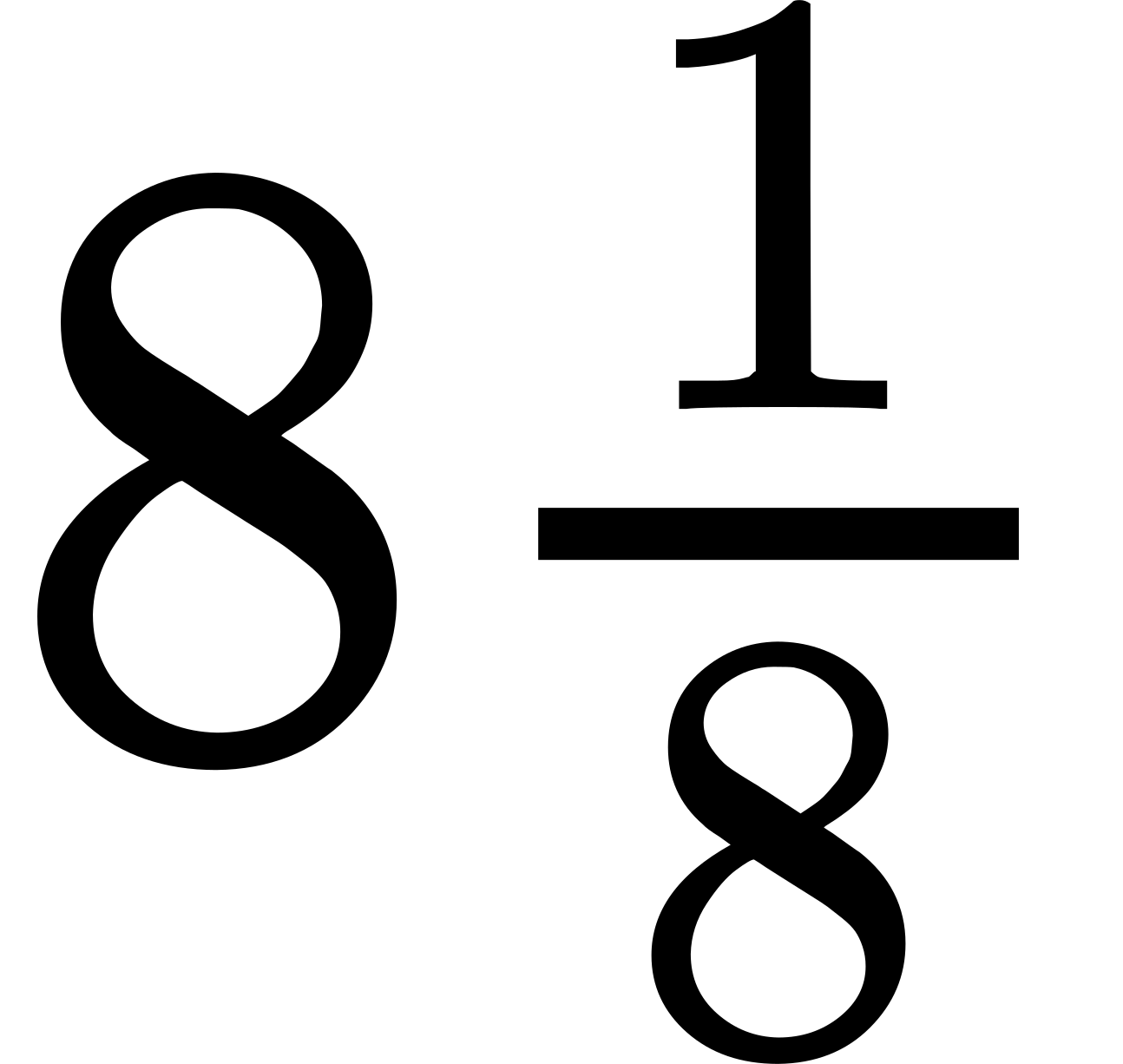 minutes
500,000,000000 feet.
minutes
500,000,000000 feet.
|
Colours.
|
Length of an
Undulation
in parts of an
Inch, in Air.
|
Number of
Undulations
in an Inch.
|
Number of Undulations
in a second.
|
|
Extreme
|
.0000266
|
37640
|
463 millions of millions
|
|
Red
|
.0000256
|
39180
|
482
|
|
Intermediate
|
.0000246
|
40720
|
501
|
|
Orange
|
.0000240
|
41610
|
512
|
|
Intermediate
|
.0000235
|
42510
|
523
|
|
Yellow
|
.0000227
|
44000
|
542
|
|
Intermediate
|
.0000219
|
45600
|
561 (= 248 nearly)
|
|
Green
|
.0000211
|
47460
|
584
|
|
Intermediate
|
.0000203
|
49320
|
607
|
|
Blue
|
.0000196
|
51110
|
629
|
|
Intermediate
|
.0000189
|
52910
|
652
|
|
Indigo
|
.0000185
|
54070
|
665
|
|
Intermediate
|
.0000181
|
55240
|
680
|
|
Violet
|
.0000174
|
57490
|
707
|
|
Extreme
|
.0000167
|
59750
|
735
|
Scholium. It was not till I had satisfied myself respecting all
these phenomena, that I found in Hooke’s Micrographia, a passage
which might have led me earlier to a similar conclusion.
“It is most evident that the reflection from the under or further
side of the body, is the principal cause of the production
of these colours—Let the ray fall obliquely on the thin
plate, part therefore is reflected back by the first superficies,—part
refracted to the second surface,—whence it is reflected
and refracted again—So that, after two refractions and one
reflection, there is propagated a kind of fainter ray,—and,
by reason of the time spent in passing and repassing,—this
fainter pulse comes behind the former reflected pulse; so
that hereby, (the surfaces being so near together that the eye
cannot discriminate them from one,) this confused or duplicated
pulse, whose strongest part precedes, and whose weakest follows,
does produce on the retina,—the sensation of a yellow—If
these surfaces are further removed asunder, the weaker
pulse may become coincident with the reflection of the
second, or next following pulse, from the first surface, and
lagg behind that also, and be coincident with the third,
fourth, fifth, sixth, seventh, or eighth;—so that, if there be
a thin transparent body, that from the greatest thinness requisite
to produce colours, does by degrees grow to the greatest
thickness,—the colours shall be so often repeated, as the
weaker pulse does lose paces with its primary or first pulse,
and is coincident with a subsequent pulse—And this, as
it is coincident, or follows from the first hypothesis I took of
colours, so upon experiment have I found it in multitudes of
instances that seem to prove it.” (P. 65—67.) This was
printed about seven years before any of Newton’s experiments
were made. We are informed by Newton, that Hooke was
afterwards disposed to adopt his “suggestion” of the nature of
colours; and yet it does not appear that Hooke ever applied that
improvement to his explanation of these phenomena, or inquired
into the necessary consequence of a change of obliquity, upon
his original supposition, otherwise he could not but have discovered
a striking coincidence with the measures laid down by
Newton from experiment. All former attempts to explain the
colours of thin plates, have either proceeded on suppositions
which, like Newton’s, would lead us to expect the greatest irregularities
in the direction of the refracted rays; or, like Mr.
Michell’s, would require such effects from the change of the
angle of incidence, as are contrary to the effects observed; or
they are equally deficient with respect to both these circumstances,
and are inconsistent with the most moderate attention
to the principal phenomena.
Corollary III. Of the Colours of thick Plates.
When a beam of light passes through a refracting surface,
especially if imperfectly polished, a portion of it is irregularly
scattered, and makes the surface visible in all directions, but
most conspicuously in directions not far distant from that of
the light itself: and, if a reflecting surface be placed parallel to
the refracting surface, this scattered light, as well as the principal
beam, will be reflected, and there will also be a new dissipation
of light, at the return of the beam through the refracting
surface. These two portions of scattered light will coincide in
direction; and, if the surfaces be of such a form as to collect
the similar effects, will exhibit rings of colours. The interval
of retardation is here, the difference between the paths of the
principal beam and of the scattered light between the two surfaces;
of course, wherever the inclination of the scattered light
is equal to that of the beam, although in different planes, the
interval will vanish, and all the undulations will conspire. At
other inclinations, the interval will be the difference of the
secants from the secant of the inclination or angle of refraction
of the principal beam. From these causes, all the colours of
concave mirrors observed by Newton and others are necessary
consequences: and it appears that their production, though
somewhat similar, is by no means, as Newton imagined, identical
with the production of those of thin plates.
Corollary IV. Of Blackness.
In the three preceding corollaries, we have considered the
refracting and reflecting substances as limited by a mathematical
surface; but this is perhaps never physically true. The
ethereal atmospheres may extend on each side the surface as
far as the breadth of one or more undulations; and, if they be
supposed to vary equally in density at every part, the partial
reflections from each of the infinite number of surfaces, where
the density changes, will very much interfere with each other,
and destroy a considerable portion of the reflected light, so that
the substance may become positively black; and this effect may
take place in a greater or less degree, as the density of the
ethereal atmosphere varies more or less equably; and, in some
cases, particular undulations being more affected than others,
a tinge of colour may be produced. Accordingly, M. Bouguer
has observed a considerable loss of light, and in some instances
a tinge of colour, in total reflections at the surface of a rarer
medium.
Corollary V. Of Colours by Inflection.
Whatever may be the cause of the inflection of light passing
through a small aperture, the light nearest its centre must be
the least diverted, and the nearest to its sides the most: another
portion of light falling very obliquely on the margin of the
aperture, will be copiously reflected in various directions; some
of which will either perfectly or very nearly coincide in direction
with the unreflected light, and, having taken a circuitous
route, will so interfere with it, as to cause an appearance of
colours. The length of the two tracks will differ the less, as
the direction of the reflected light has been less changed by its
reflection, that is, in the light passing nearest to the margin; so
that the blues will appear in the light nearest the shadow. The
effect will be increased and modified, when the reflected light
falls within the influence of the opposite edge, so as to interfere
with the light simply inflected by that also.
But, in order to examine the consequences more minutely, it
will be convenient to suppose the inflection caused by an ethereal
atmosphere, of a density varying as a given power of the distance
from a centre, as in the eighth proposition of the last
Bakerian Lecture. (Phil. Trans. for 1801, p. 83.) Putting
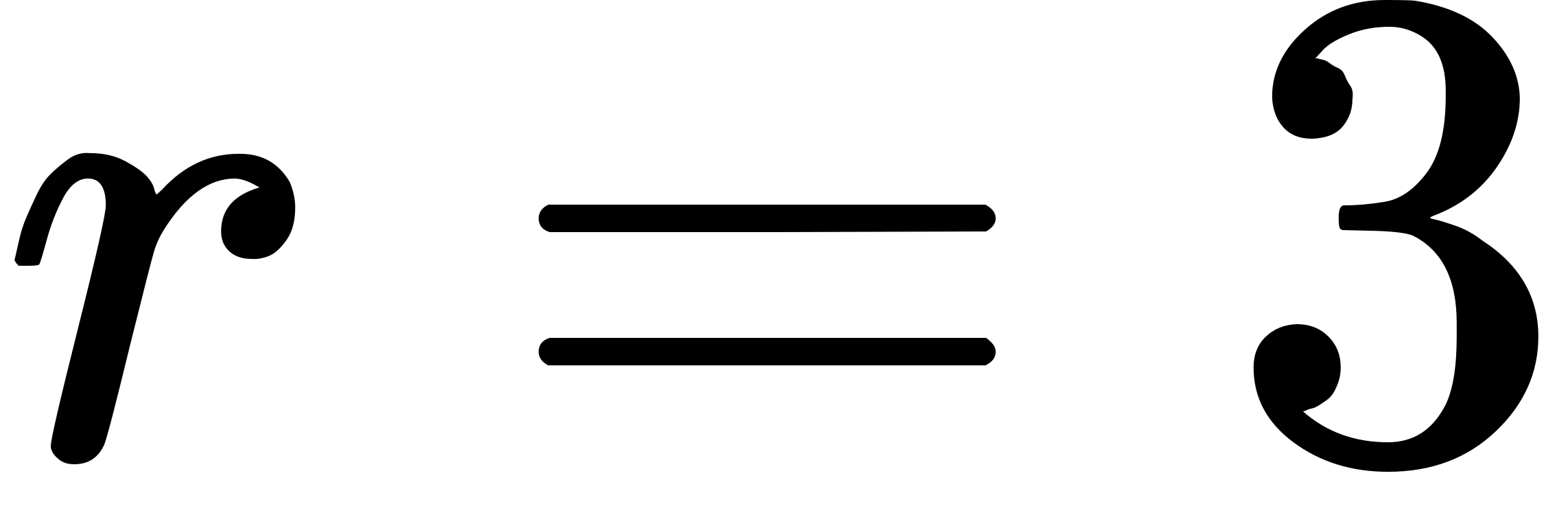 , and
, and 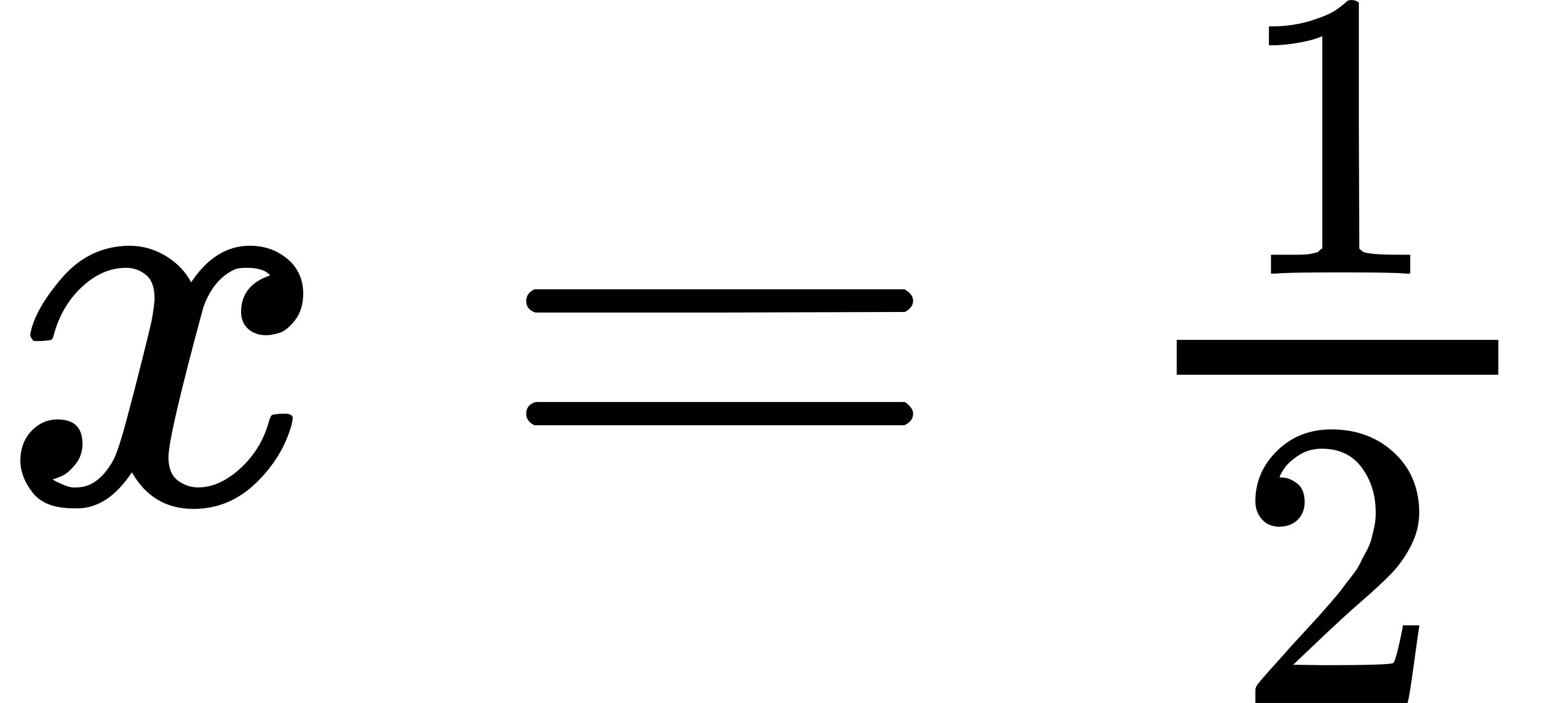 , I have constructed a diagram, (Fig. 4.) which
shows, by the two pairs of curves, the relative position of the reflected
and unreflected portions of any one undulation at two
successive times, and also, by shaded lines drawn across, the parts
where the intervals of retardation are in arithmetical progression,
and where similar colours will be exhibited at different distances
from the inflecting substance. The result fully agrees with the
observations of Newton’s third book, and with those of later
writers. But I do not consider it as quite certain, until further
experiments have been made on the inflecting power of different
substances, that Dr. Hooke’s explanation of inflection,
by the tendency of light to diverge, may not have some pretensions
to truth. I am sorry to be obliged to recall here the assent
which, at first sight, I was induced to give to a supposed improvement
of a late author. (Phil. Trans. for 1800, p. 128.)
, I have constructed a diagram, (Fig. 4.) which
shows, by the two pairs of curves, the relative position of the reflected
and unreflected portions of any one undulation at two
successive times, and also, by shaded lines drawn across, the parts
where the intervals of retardation are in arithmetical progression,
and where similar colours will be exhibited at different distances
from the inflecting substance. The result fully agrees with the
observations of Newton’s third book, and with those of later
writers. But I do not consider it as quite certain, until further
experiments have been made on the inflecting power of different
substances, that Dr. Hooke’s explanation of inflection,
by the tendency of light to diverge, may not have some pretensions
to truth. I am sorry to be obliged to recall here the assent
which, at first sight, I was induced to give to a supposed improvement
of a late author. (Phil. Trans. for 1800, p. 128.)
Scholium. In the construction of the diagram, it becomes necessary
to find the time spent by each ray in its passage.
Since the velocity was denoted by 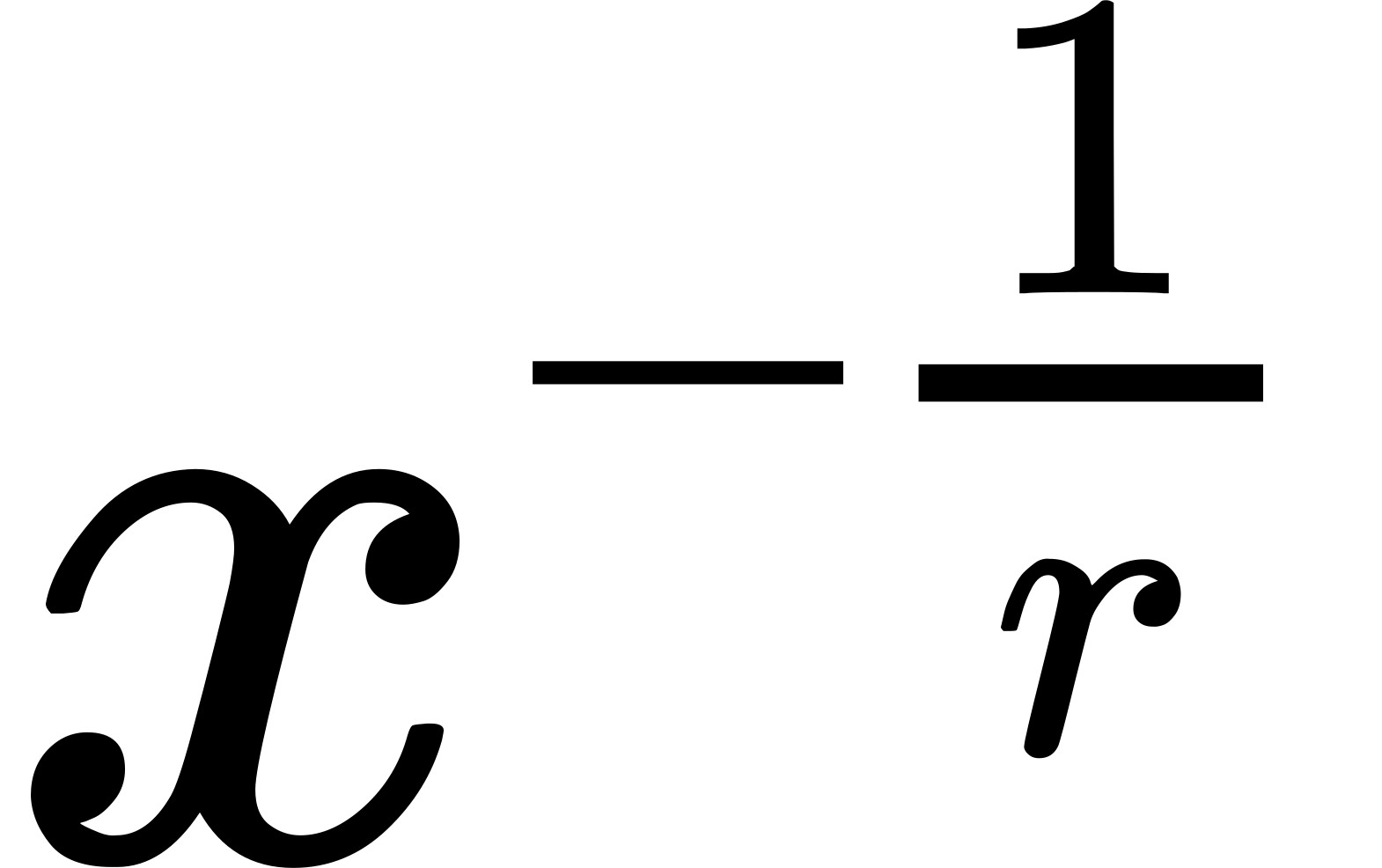 , on the supposition of a
projectile, it will be as
, on the supposition of a
projectile, it will be as 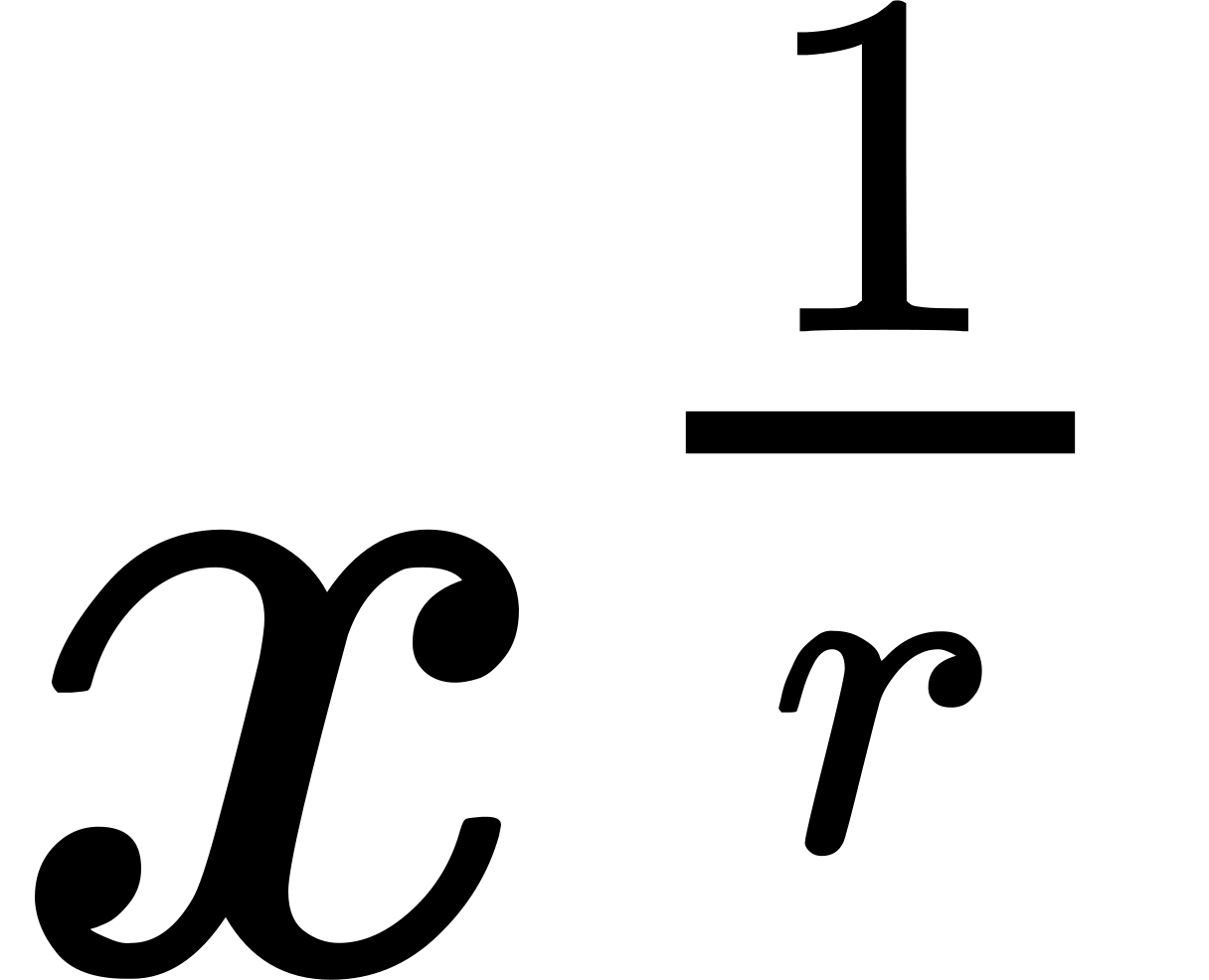 on the contrary supposition, (Phil.
Trans. for 1801, p. 27. Schol. 2. Prop. I.) and the fluxion of the
distance described being
on the contrary supposition, (Phil.
Trans. for 1801, p. 27. Schol. 2. Prop. I.) and the fluxion of the
distance described being 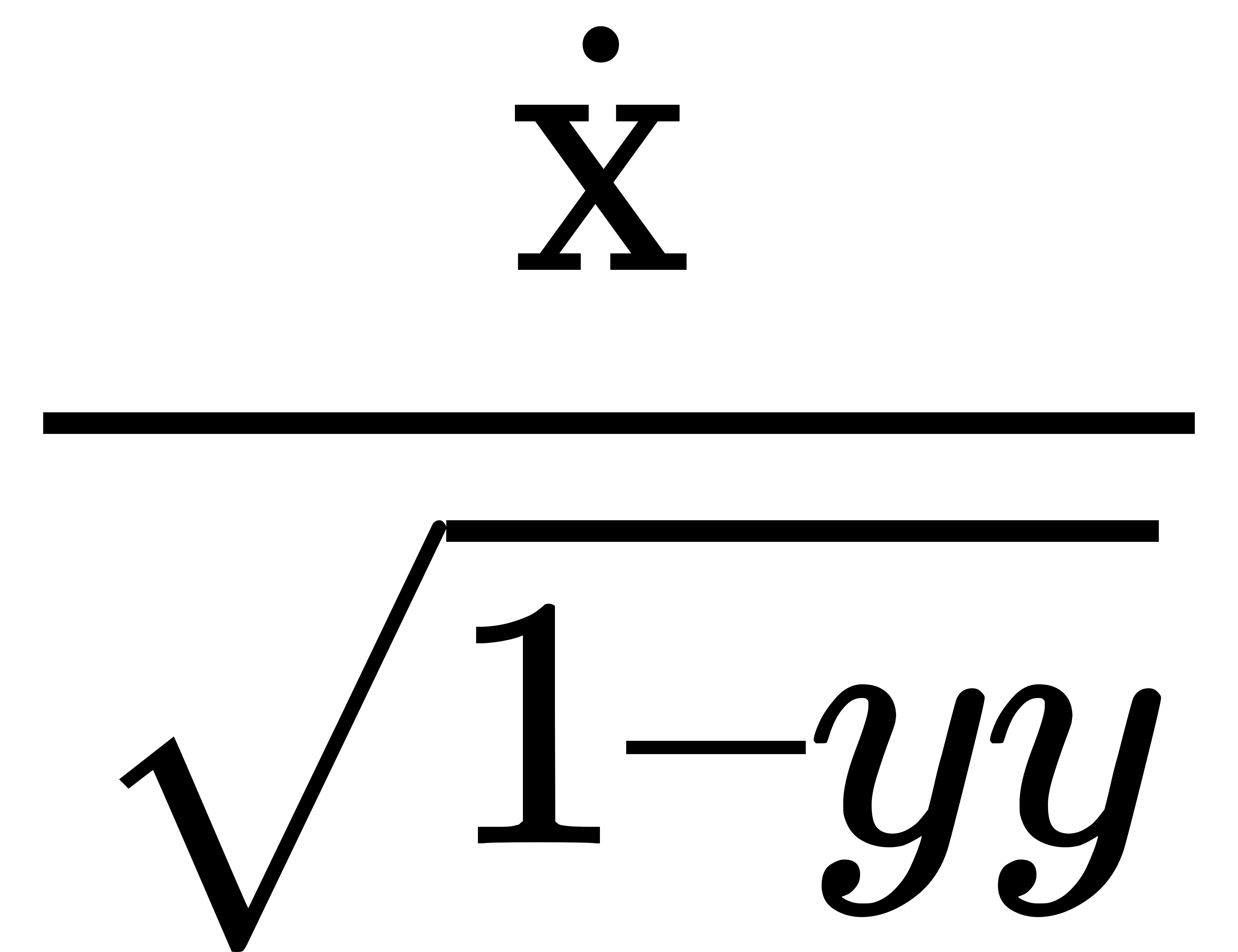 , that of the time will be
 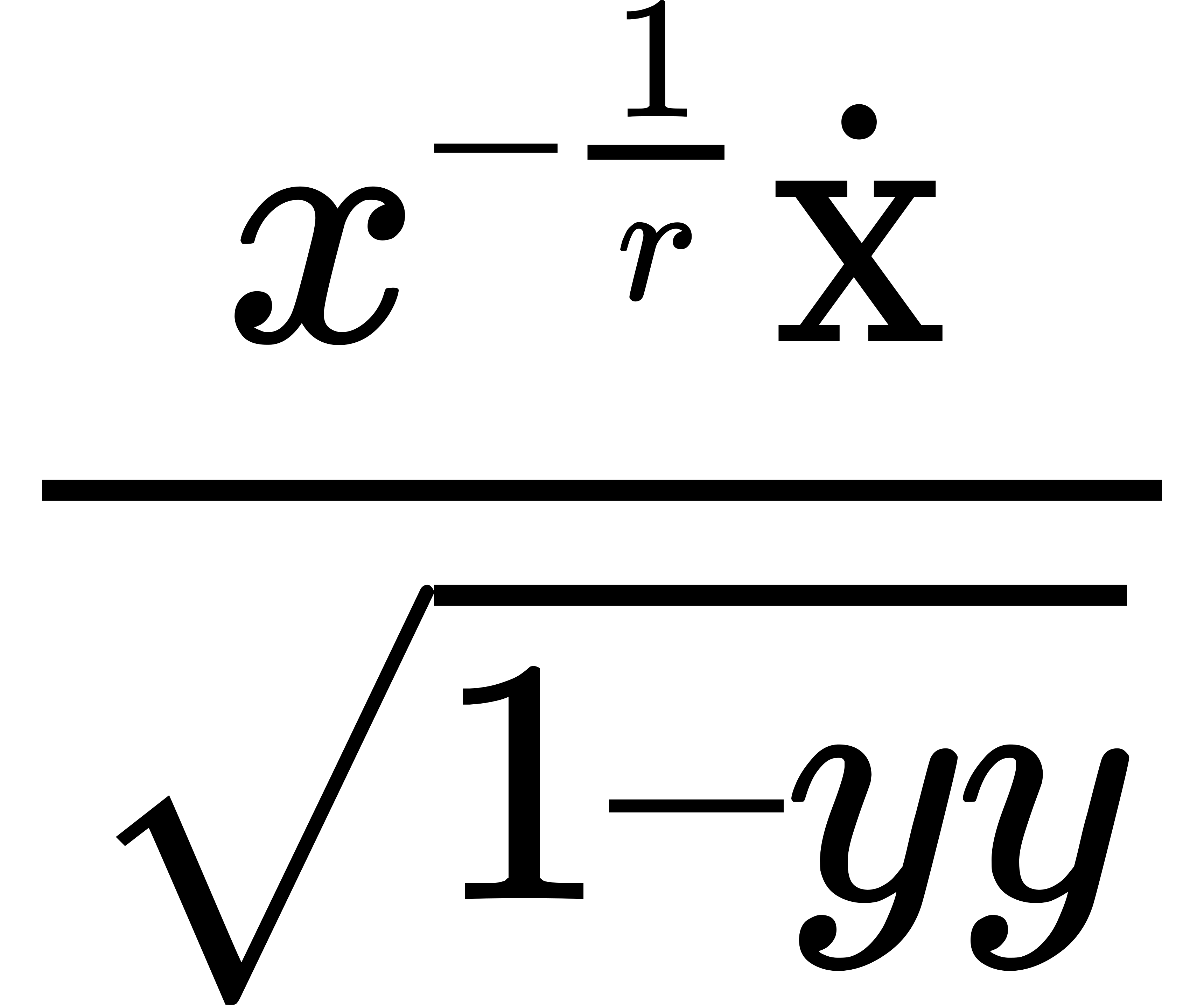 or
or 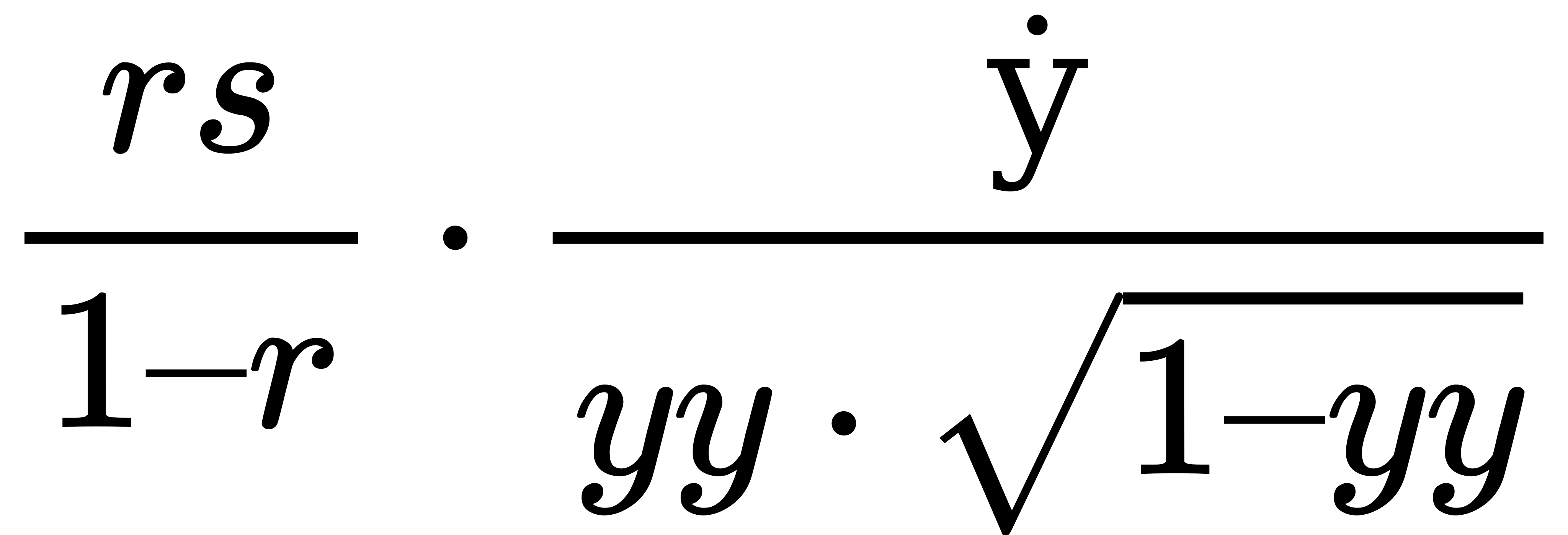 , of which the fluent is
 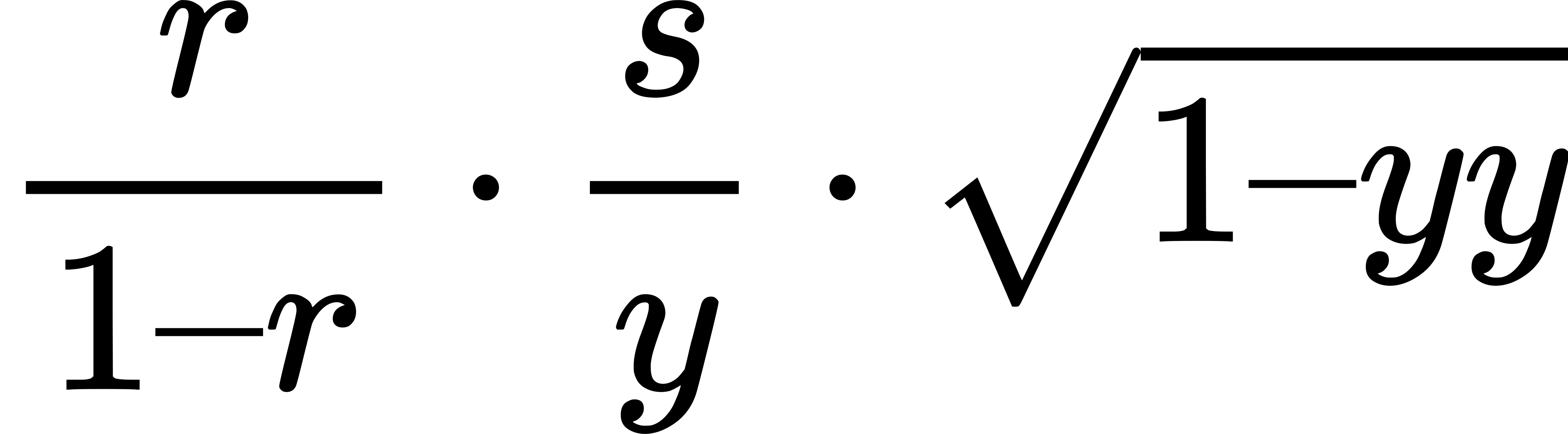 .
Therefore, with the radius
.
Therefore, with the radius 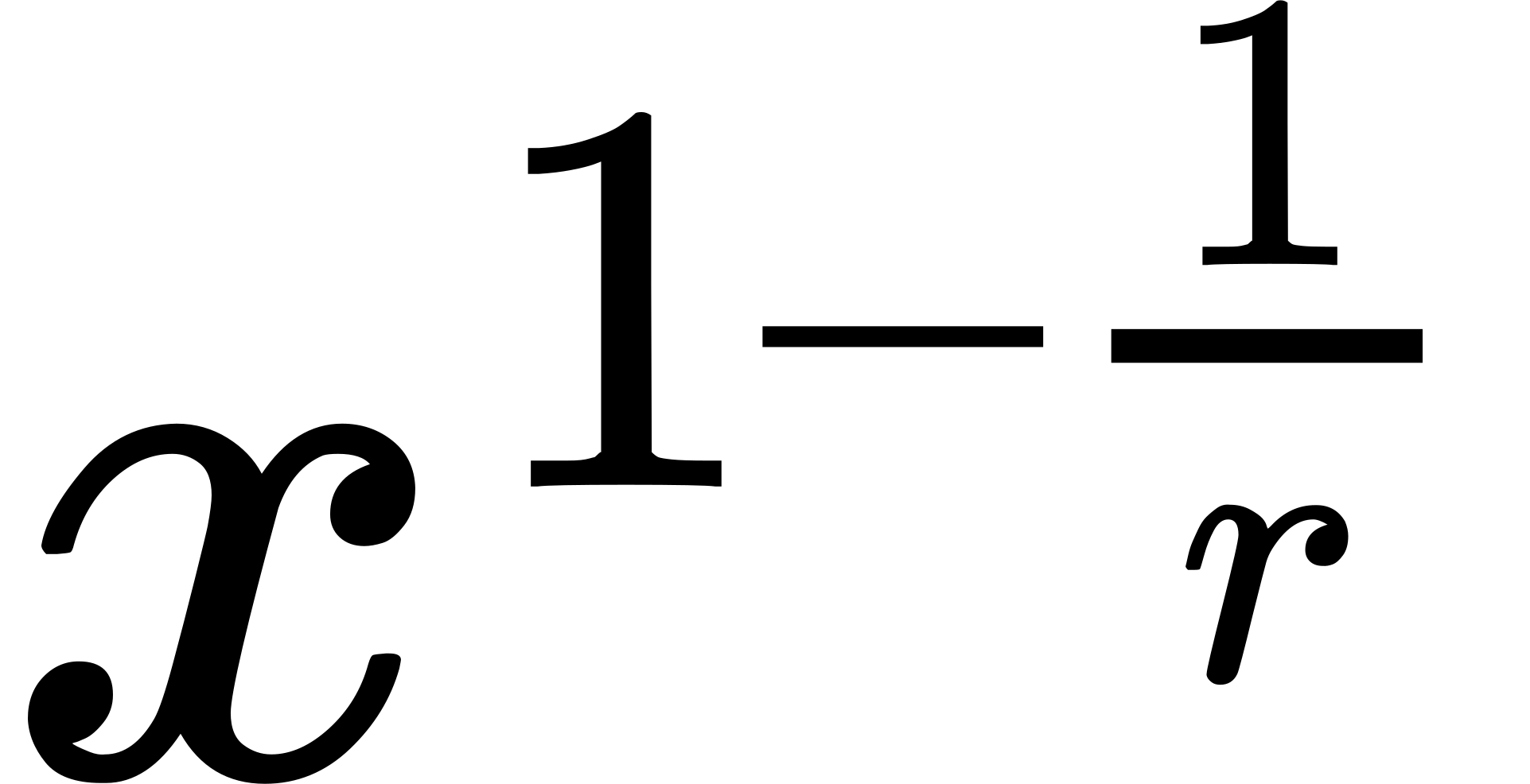 , describe a circle concentric
with the surfaces of the inflecting atmosphere, then the angle
described by the ray during its passage through the atmosphere,
will always be to the angle subtended by the line cut off by
this circle from the incident ray produced, in the ratio of
, describe a circle concentric
with the surfaces of the inflecting atmosphere, then the angle
described by the ray during its passage through the atmosphere,
will always be to the angle subtended by the line cut off by
this circle from the incident ray produced, in the ratio of  to
to 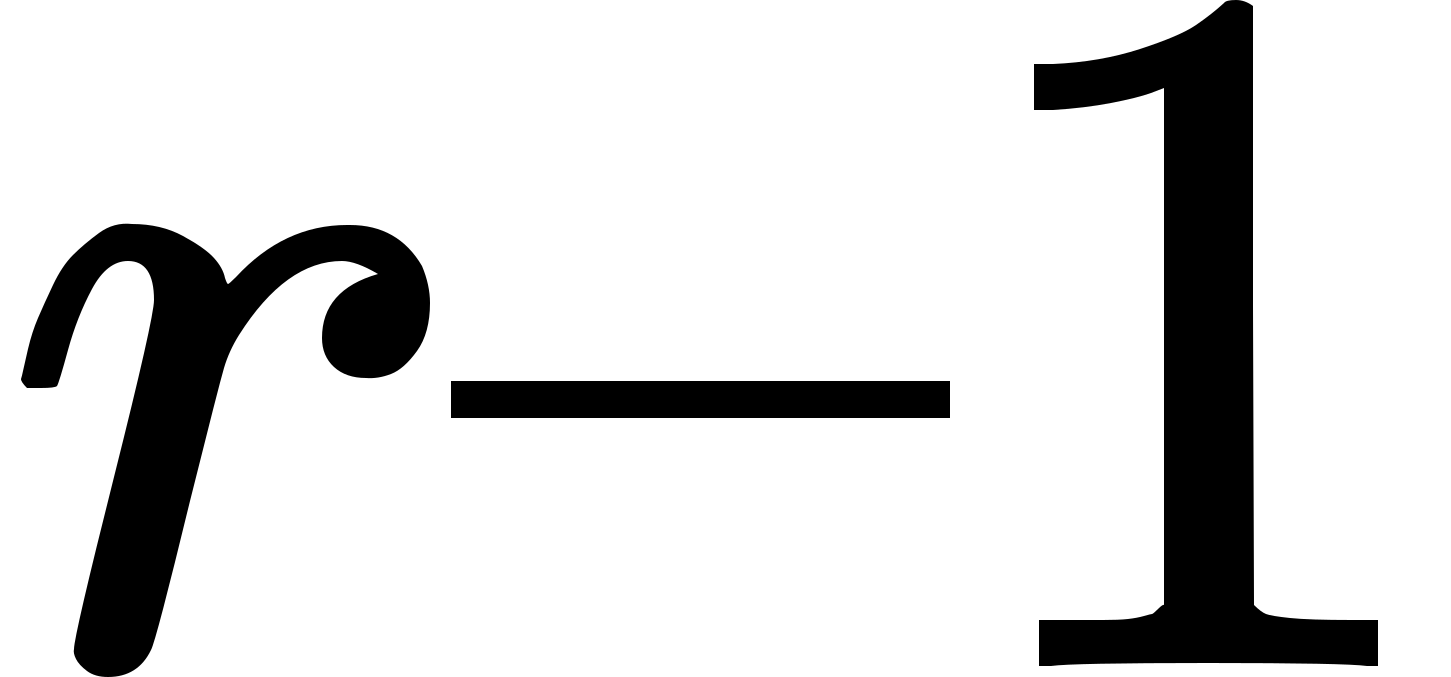 ;
and the time spent in this passage, will be in the same
ratio to the time that would have been spent in describing this
intercepted portion with the initial velocity. For
;
and the time spent in this passage, will be in the same
ratio to the time that would have been spent in describing this
intercepted portion with the initial velocity. For 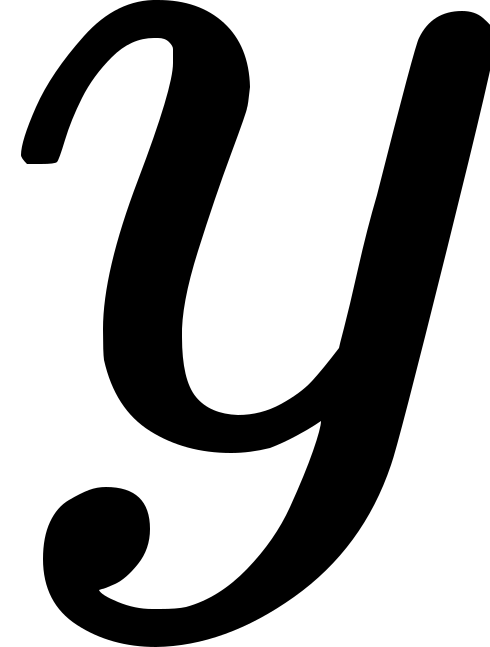 , being equal
to
, being equal
to 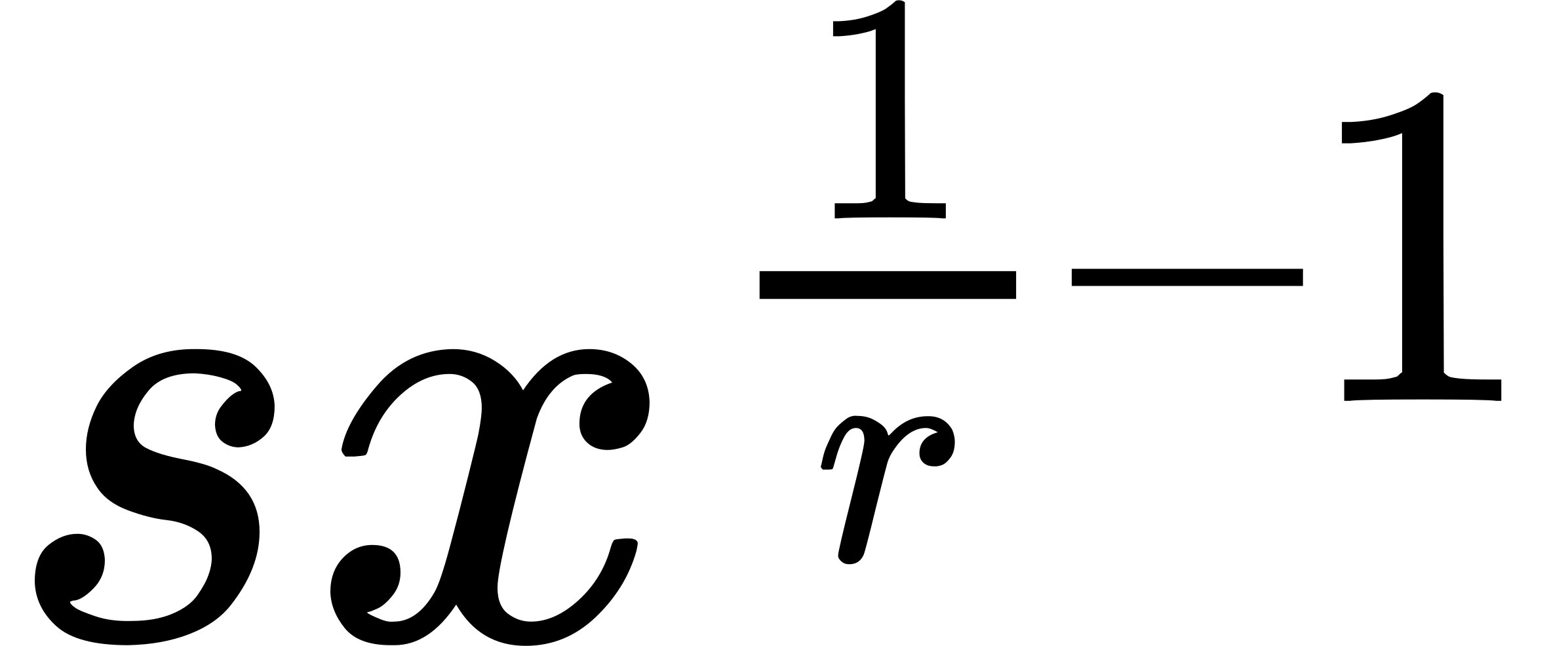 is the sine of the inclination of the incident ray to the
radius, where it meets this circle; therefore, by the proposition
quoted, the angle described is in a given ratio to the angle at
the centre, which is the difference of the inclinations. Making
or
is the sine of the inclination of the incident ray to the
radius, where it meets this circle; therefore, by the proposition
quoted, the angle described is in a given ratio to the angle at
the centre, which is the difference of the inclinations. Making
or 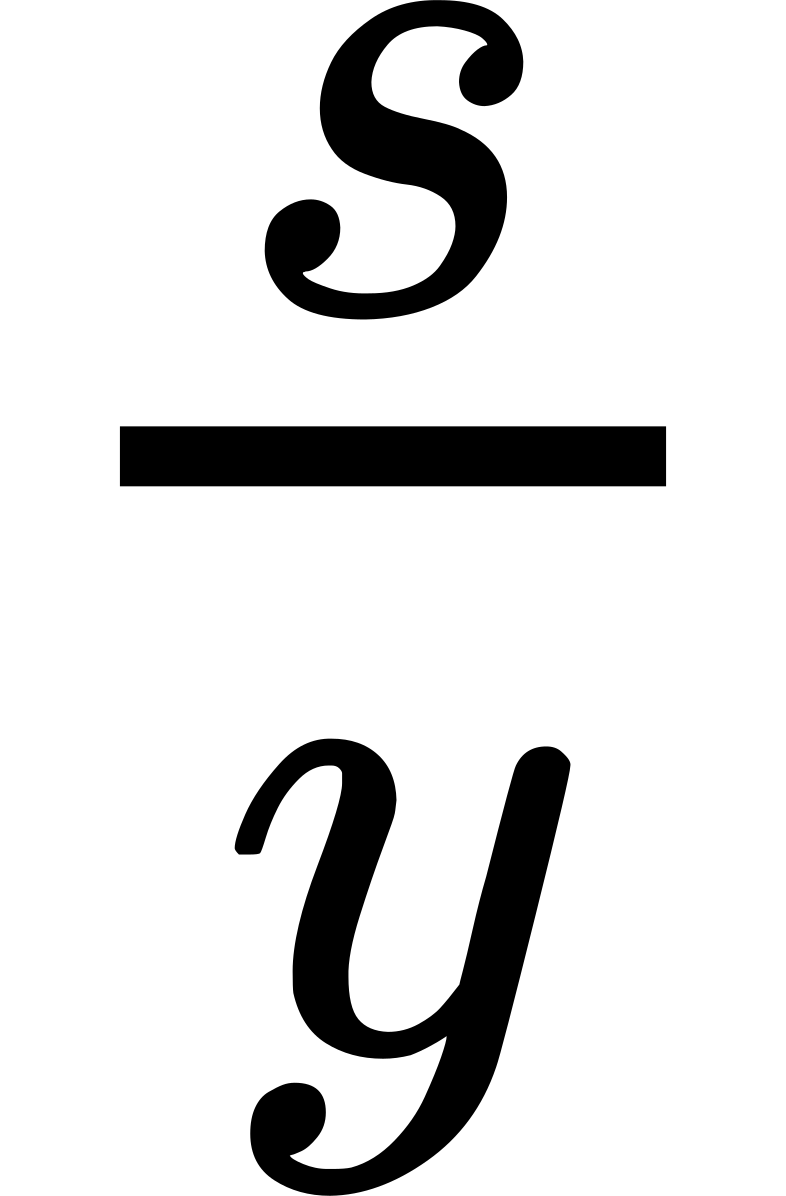 radius, the sine, instead of , becomes
 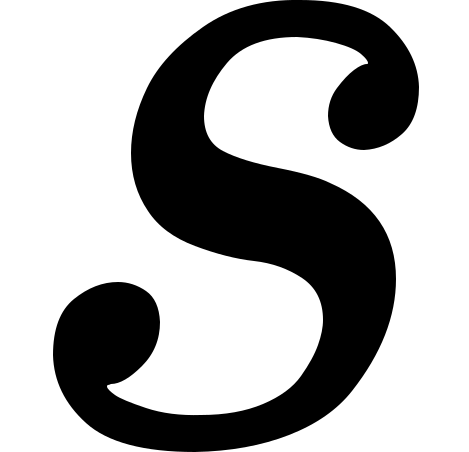 , and the cosine
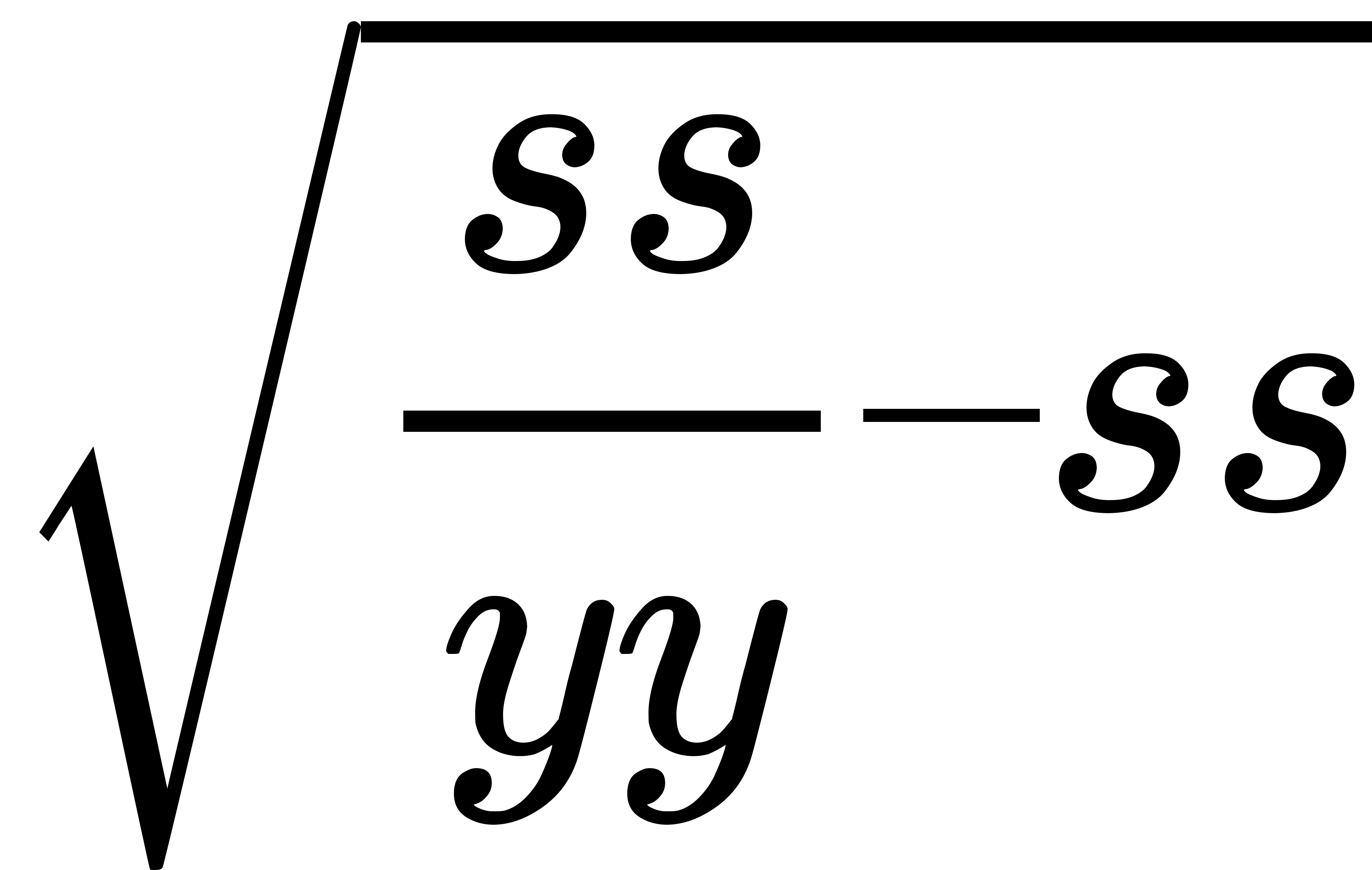 or
or 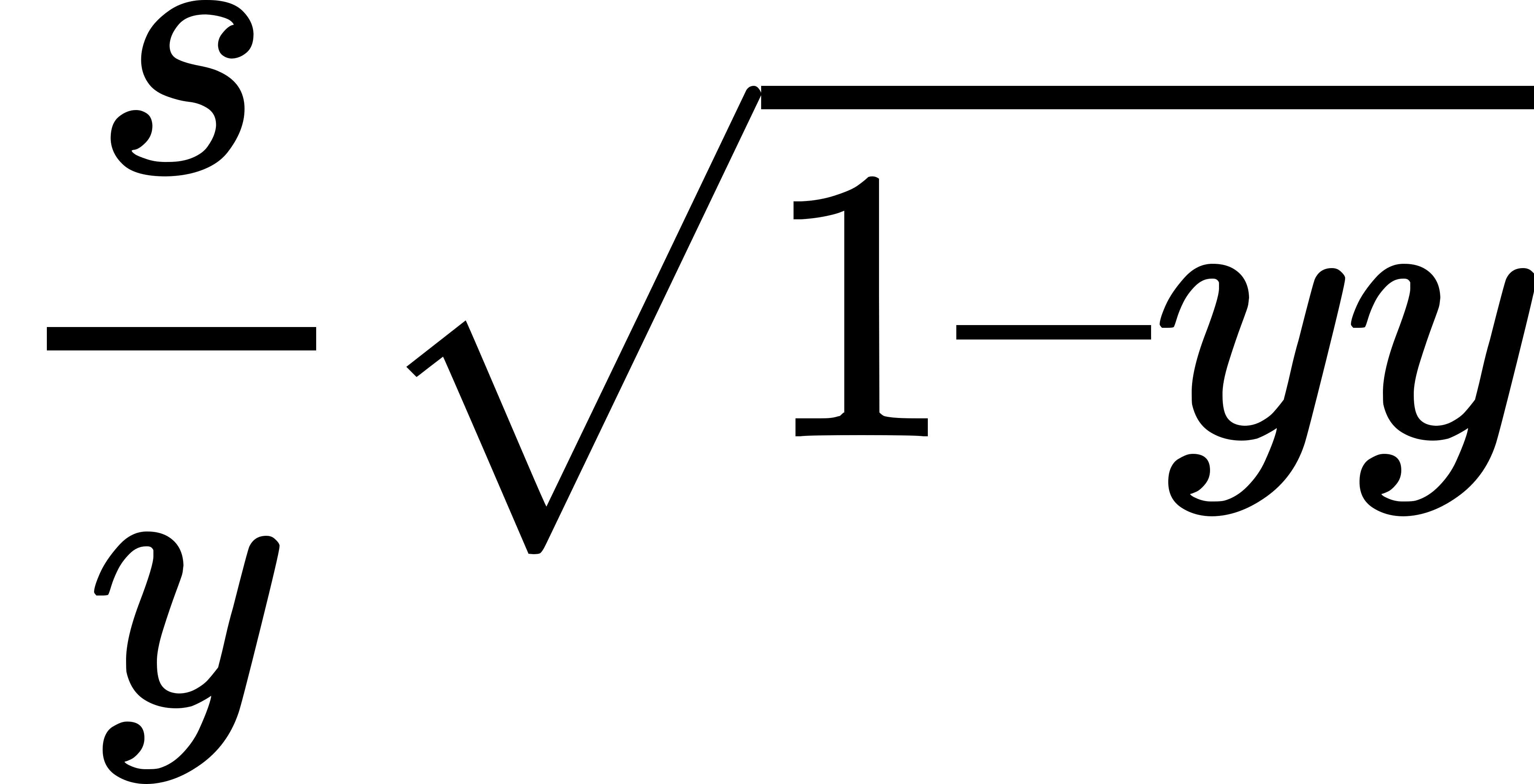 , and, when
 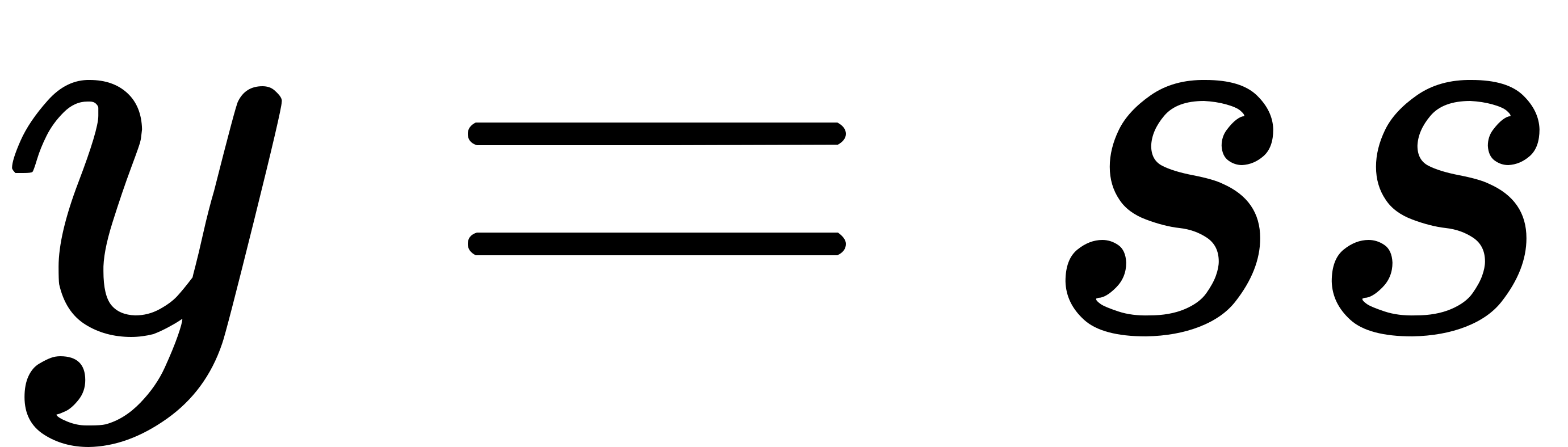 ,
, 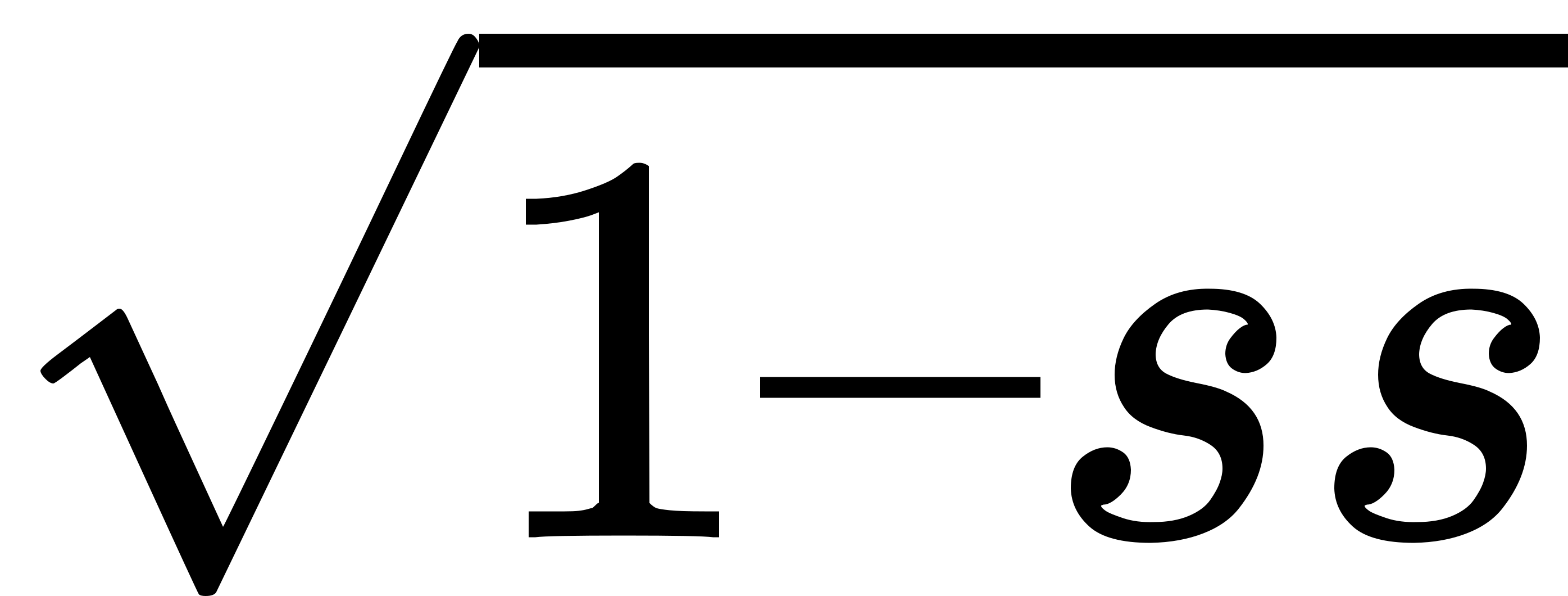 ;
therefore the line intercepted is to the difference of the fluents
as to . (See also Young’s Syllabus, Art. 372.)
;
therefore the line intercepted is to the difference of the fluents
as to . (See also Young’s Syllabus, Art. 372.)
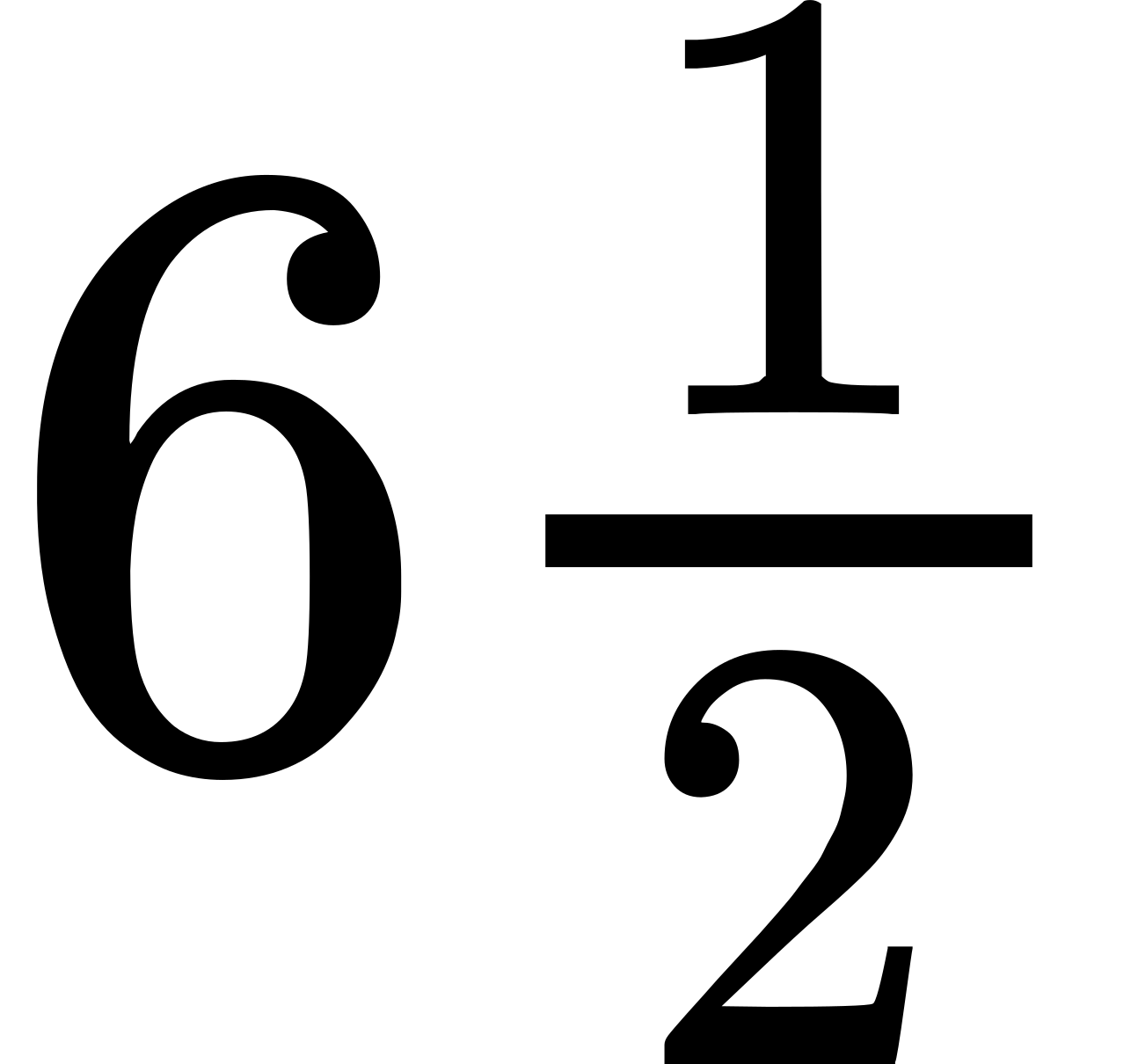 , will affect
equally the particles in unison with yellow and blue, and produce
the same effect as a light composed of those two species:
and each sensitive filament of the nerve may consist of three
portions, one for each principal colour. Allowing this statement,
it appears that any attempt to produce a musical effect from
colours, must be unsuccessful, or at least that nothing more
than a very simple melody could be imitated by them; for the
period, which in fact constitutes the harmony of any concord,
being a multiple of the periods of the single undulations, would
in this case be wholly without the limits of sympathy of the
retina, and would lose its effect; in the same manner as the
harmony of a third or a fourth is destroyed, by depressing it to
the lowest notes of the audible scale. In hearing, there seems
to be no permanent vibration of any part of the organ.
, will affect
equally the particles in unison with yellow and blue, and produce
the same effect as a light composed of those two species:
and each sensitive filament of the nerve may consist of three
portions, one for each principal colour. Allowing this statement,
it appears that any attempt to produce a musical effect from
colours, must be unsuccessful, or at least that nothing more
than a very simple melody could be imitated by them; for the
period, which in fact constitutes the harmony of any concord,
being a multiple of the periods of the single undulations, would
in this case be wholly without the limits of sympathy of the
retina, and would lose its effect; in the same manner as the
harmony of a third or a fourth is destroyed, by depressing it to
the lowest notes of the audible scale. In hearing, there seems
to be no permanent vibration of any part of the organ.